

Why Owesa Exists
Modern workers experience high-fidelity careers inside fragmented professional systems. This essay introduces ecosystem thinking as a structural lens for understanding identity, opportunity, and alignment.

Built for a Different Era
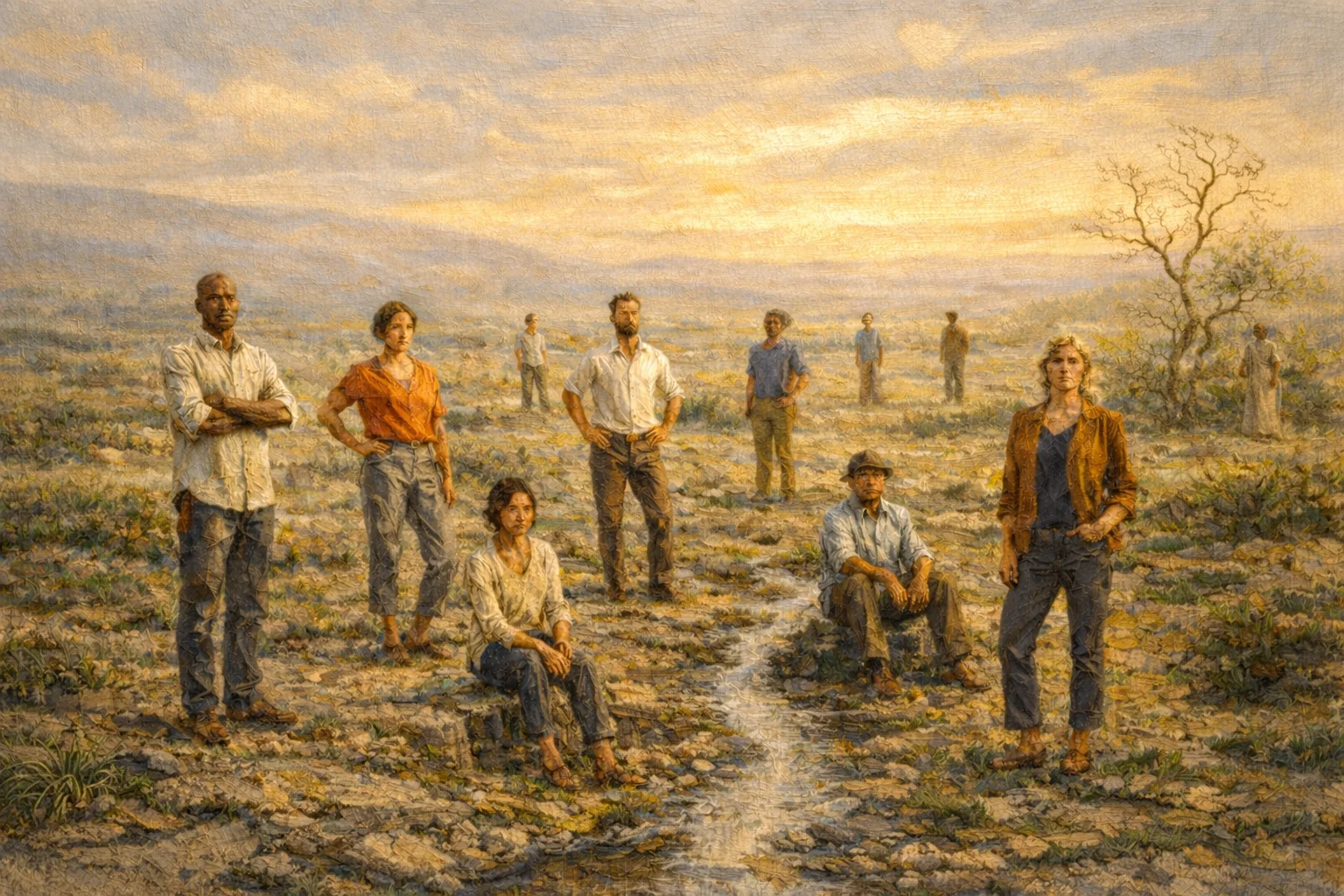
Modern work is a high-fidelity experience operating inside a low-resolution system.
The mismatch is no longer a localized friction. It is a structural misalignment. While individuals have evolved into fluid, globally-aware, technology-augmented operators, much of the infrastructure supporting them was designed for a different era. We are navigating a post geographic, AI-integrated reality using systems built for containment and stability.
The result is not collapse. It is constraint.
We are told that work is transforming. In many ways, it is. But the platforms professionals rely on were not designed for transformation. They are optimized for engagement and data capture, not for compounding agency. Conversation is measured as activity. Identity is stored as a record. Professional connection is often reduced to transactions.
Owesa exists because modern workers require infrastructure that reflects how they truly operate.
The Modern Worker Is an Operator, Not a Record
The modern worker is not a demographic. It is a posture. Adaptable. Independent. Tech-forward. Globally-aware. Comfortable collaborating across time zones and tools. Capable of moving between projects, industries, and roles without losing coherence.
Whether a student entering a fractured market or a senior leader recalibrating leverage, the orientation is similar. Work is no longer a ladder. It is a portfolio. Skills are layered. Reputation compounds across systems.
Modern workers think systemically. They understand their network, knowledge, and credibility are assets. They expect clarity. They prefer signal over noise. They want to participate, not just perform.
Yet, most professional infrastructure still assumes the individual is a static record in a database. It assumes linear progression. It assumes value can be captured by a resume frozen in time.
This is the central misalignment.
Work has modernized at the edge. Infrastructure has modernized more slowly at the core.
Infrastructure shapes behavior. When systems are fragmented, careers fragment with them.
Fragmentation Is the Primary Constraint
Today, professional life is scattered across multiple disconnected environments. Ideas are expressed in one place. Opportunities are searched for in another. Credentials are stored elsewhere. Conversations rarely compound. Context rarely travels.
Fragmented infrastructure produces fragmented outcomes.
A thoughtful contribution made in one system does not inform opportunity in another. A meaningful collaboration does not strengthen identity elsewhere. Professional history is repeatedly re-entered and re-explained across platforms that do not meaningfully integrate.
The cost is not only inefficiency. It is dilution.
When conversation is separated from opportunity, context erodes. When hiring is separated from community, matching becomes abstract. When identity is stored exclusively inside corporate databases, ownership weakens.
Identity without control is not leverage. It is limitation.
The future of work does not require more isolated tools. It requires coherence.
Conversation Is Infrastructure
Professional growth happens through dialogue.
It happens when ideas meet resistance. When adjacent industries cross pollinate. When experience responds to curiosity. When disagreement is handled with rigor and respect.
For too long, professional platforms have treated conversation as a feature layered on top of profile and job mechanics.
Conversation is not a feature. It is infrastructure.
If conversation is performative, it becomes noise. If it is designed intentionally, it becomes a knowledge layer that compounds over time.
Owesa is built on this belief.
Design shapes behavior. When dialogue is structured, searchable, and connected to opportunity, it strengthens identity rather than distracting from it.
The Owesa Ecosystem
Owesa is an ecosystem for the modern worker.
A product is something you use. An ecosystem is something you inhabit. It is a coherent environment where conversation, opportunity, identity, and intelligence reinforce one another.
Hive
Hive is the open, career-focused stream. It enables rapid exchange of questions, observations, and insight across industries and topics. It creates surface area for discovery without collapsing into pure visibility mechanics.
Hubs
Hubs are persistent, searchable discussion spaces organized by industry and theme. They allow depth to accumulate. Conversations build memory. Knowledge compounds. Participation strengthens context.
Huddles
Huddles extend public dialogue into private collaboration. They provide trusted spaces for small group discussion, coordination, and real time exchange. Context moves from idea to action.
Jobs
Jobs connects opportunity directly to active participation. Roles are not isolated listings. They exist within an ecosystem of dialogue, credibility, and contribution. A transparent credit system aligns incentives and reduces friction.
When conversation, identity, and opportunity exist inside one coherent environment, value compounds rather than resets.
An ecosystem reduces the distance between insight and action.
A System Designed for Iteration
Owesa is intentionally built as a layered system in continuous evolution.
Future phases include dynamic, high-fidelity representations of lived work that move beyond static resumes. Think skill-based, portfolio-driven profiles that reflect actual contribution rather than summaries.
Identity will evolve toward digital ownership models where credentials and professional data are verifiable and controlled by individuals. Blockchain anchored records and decentralized identity layers are part of this long-term direction. The objective is not novelty. It is alignment between agency and infrastructure.
There is no final version. There is only iteration in response to how modern work continues to evolve.
The Role of Owesa Labs
An ecosystem without an intellectual archive becomes transactional.
Owesa Labs provides the cognitive infrastructure of the platform. Through Journal, Signal, and Studio, it builds durable insight that sharpens how modern workers think about the systems they inhabit.
Journal is the long-form essay archive. It names structural tensions and explores them with depth.
Signal is the newsletter and social feed. It frames emerging ideas and sharpens thinking in motion.
Studio connects insight to implementation for organizations that want to operate more coherently inside modern systems.
If the platform is the structural layer, Labs is the cognitive layer.
Professional infrastructure shapes behavior. Thought infrastructure shapes interpretation. Both matter.
Alignment Over Noise
The future of work will not be defined by louder platforms, more features, or increasingly intrusive automation. It will be defined by alignment between how people operate and the systems that support them.
Professional infrastructure is entering an ecosystem phase.
Owesa is designed for that phase. Not as a reaction, but as an architectural response to a world that has already changed.
The goal is simple and enduring. To reduce fragmentation, increase agency, and build infrastructure to help maximize human capacity of the modern worker.
Join Owesa Signal
A newsletter for the modern worker.
It is a concise weekly pulse that surfaces patterns, tensions, and signals worth attention. It respects time, avoids noise, and favors judgment over volume.